|
|
 |
|
 |
|
 |
|
 |
|
 |
|
 |
|
 |
|
 |
|
 |
|
 |
|
|
|
|
|
|
|
|
|
|
 |
|
|||||||||
 |
 |
|
||||||||
 |
 |
 |
 |
 |
|
|||||
 |
 |
 |
|
|||||||
 |
 |
 |
 |
|
||||||
 |
|
|||||||||
 |
|
|||||||||
 |
 |
|
||||||||
|
|

|
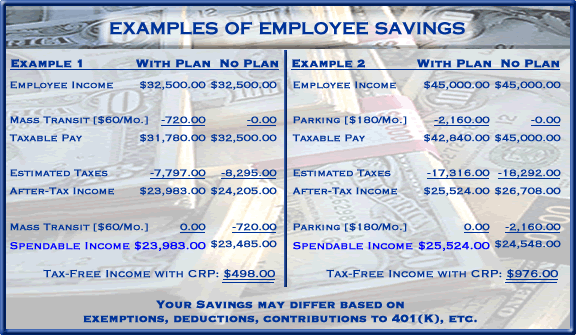
HOW THE PLAN WORKS The Commuter Reimbursement Plan (CRP) allows you to use untaxed salary to pay for your work related mass transit or parking expenses - your commutation expenses. Congress created this plan to encourage carpooling and mass transit. The CRP pre-tax rules are outlined at Internal Revenue Code Section 132(f)(4). You save on federal, state and social security payroll taxes. Only a few states do not recognize savings from state income tax - California follows federal law. We estimate employees will save about $200 on mass transit and $600 on parking expenses. The higher your tax bracket, the more you will save each year. Also, you may enroll, modify or stop your contributions when your transportation expenses change. There are no extra forms to fill out when filing your tax return. Below are the simple rules for the MASS TRANSIT and PARKING pre-tax benefits. You may enroll in one or both accounts as needed.
|
||
|
NEW BENEFIT LIMITS FOR CALENDAR YEAR 2002 1. MASS TRANSIT: You may deduct up to $100 each month from your salary ($1,200 per calendar year) on a pre-tax basis to pay your mass transit and vanpool expenses when traveling to or from work. Eligible Expenses: Trains, buses, subways, ferries and vanpools (see definition below). A vanpool or "commuter highway vehicle" must have a seating capacity of at least 6 adults (not including the driver) and at least 80% of the mileage must be used for transporting employees between their homes and places of employment. For these commuting trips, the number of employees transported must be at least one-half of the adult seating capacity of the vehicle, excluding the driver. Carpools that do not satisfy the vanpool definition noted above are not eligible for the Program. Ineligible expenses: Bicycling, walking, roller blading, tolls, cab fare, parking and carpools that do not meet the vanpool definition. Also, spouse's transit expenses may not be included with your CRP. Each employer must establish separate CRPs. 2. PARKING: You may deduct up to $185 each month ($2,220 per calendar year) on a pre-tax basis to pay your parking expenses incurred at or near the company worksite or to a location from which you commute to work by carpool, vanpool or mass transit (you may enroll for parking and mass transit if needed). Ineligible Expenses: Bridge tolls, gasoline, parking at your residence or spouse's parking expenses.
|
||
|
MASS TRANSIT & PARKING FROM MORE THAN ONE EMPLOYER Some employees have more than one job. Each employer may establish a CRP with employees electing to reduce their salary up to the federal limits outlined in this Summary.
|
||
|
PLANNING YOUR EXPENSES AND ENROLLMENT Estimate your commuter expenses for the plan year provided during the open enrollment period or at your hire date. You may also contact TAI about your specific plan year. Using the Enrollment Form available online, indicate the amount you want deducted for the year and return it to Human Resources by the due date. The amount elected will be deducted evenly each pay period throughout the year.
|
||
|
CHANGING YOUR CONTRIBUTIONS - MODIFICATIONS - CARRYOVER RULE You may enroll, modify or disenroll during the year by notifying Payroll or Human Resources. You do not need a "status" or "life event" to modify your contribution to the CRP. However, so the administration does not become difficult, please try to minimize changes and plan carefully. A CRP does not have a "Use-it or Lose-it" rule like a Flex-Plan. Commencing with the 2002 calendar year - you may carry-over unused/unclaimed contributions for future monthly commuter expenses, including the next plan year, up to the monthly amount you enrolled and prior to any modification. In other words, your modification is for future deductions (going forward), not retroactive. Monthly reimbursements can never exceed the federal limits for parking or mass transit. Lastly, you cannot transfer unclaimed amounts from one employer to another employer. If your expenses are the same each month (e.g. you purchase a monthly transit pass or park at a lot at the same rate each month), modifications should not be necessary.
|
||
|
SUBMITTING CLAIMS AND REIMBURSEMENT OF EXPENSES After incurring a commuter expense, file a claim with Trust Administrators, Inc. (TAI). Be sure to include copies of the transit ticket, transfer, Fast Pass or parking receipt - keep a copy of the claim and receipts for your records. If you don not have receipts, see below. TAI will reimburse you according to the schedule listed on the Claim Form distributed during the Open Enrollment period or date of hire. If you have questions about your reimbursement schedule, contact TAI. Claim Forms are available online from Forms section and from Human Resources. You have an additional 90 days ("Grace" period) to file for commuter expenses incurred during the previous plan year. Unclaimed amounts are not returned as taxable income as in prior years.
|
||
|
COMMUTER EXPENSES WITHOUT RECEIPT Based on regulations published by the IRS on 1/11/01, if a parking or transit receipt is not provided in the ordinary course of business (e.g. parking at meters or lots requiring you to place money in a slot or transit ticket not returned when exiting turnstyle) then receipts are not required if you certify the type and amount of expenses incurred. (See Forms at CRP section).
|
||
|
TERMINATION OF EMPLOYMENT In the event of termination of employment, pursuant to regulations published by the IRS on 1/11/01, your last CRP contribution and reimbursement will be prorated to the date of termination. You have up to 180 days from your termination date to submit claims. That time period, however, shall not extend beyond any 90 day grace period from any plan year end if your termination was in a prior plan year.
|
||
|
|